


Dog · 12 products
Brushes and slickers
A pin brush, a semi-rigid slicker or soft-pin brush: these brushes and slickers care for your dog's coat, whether short or long.
Dog · Brushes and slickers
A pin brush, a semi-rigid slicker or soft-pin brush: these brushes and slickers care for your dog's coat, whether short or long.
Filters
12 products


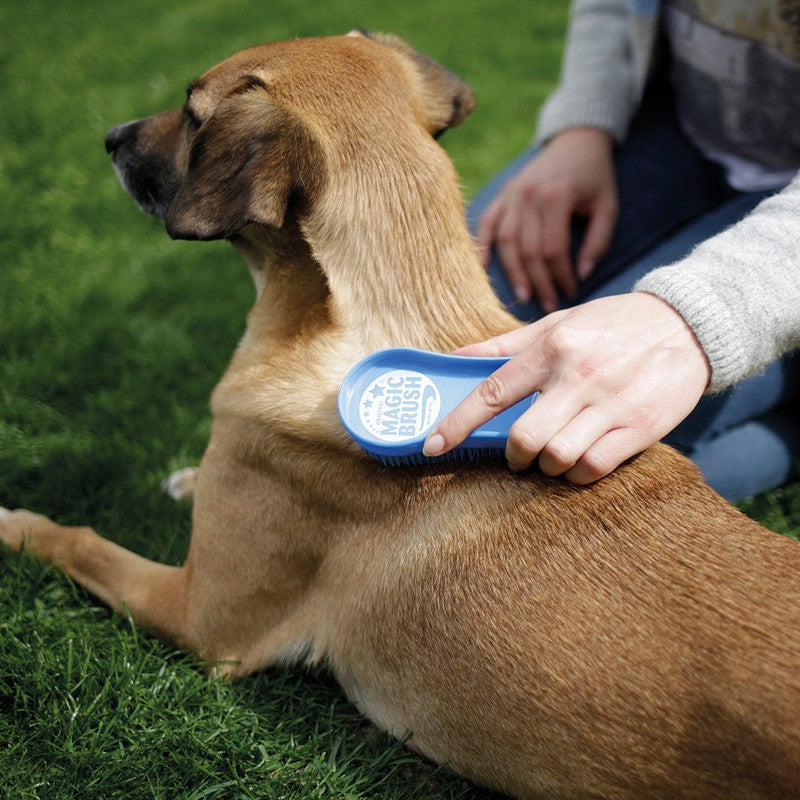


Dog brushes and slickers: removing dead hair and undercoat
A semi-rigid universal slicker, a metal-pin pin brush, or a soft brush for sensitive skin: this range brings together Artero, Kerbl and Centaure, in several head sizes suited to small and large dogs alike.
Soft or firm slicker: which to choose?
A soft-pin slicker suits fine coats or sensitive skin, while a firmer "knot special" slicker is reserved for large, dense-coated dogs and heavily tangled fur. A metal-pin pin brush sits in between, for regular everyday use.
How to brush your dog without irritation
The main goal is always removing knots without pulling: brush in the direction of the coat, in small sections, and stop as soon as your dog shows discomfort. Short, frequent sessions are gentler than one long brushing once a month.
Why buy at Animorix
Pair your brush with a comb or detangler for finishing touches, and find the same range for your cat in cat brushes and slickers, with brands such as Artero, with free delivery from €99 and secure returns within 14 days.