



If your dog pulls on the leash, the simplest and most comfortable solution for both of you is a no-pull harness, which spreads the pressure across the chest instead of the neck. A good harness will not fix the behaviour on its own, but it makes walks far more pleasant while you work on training, and it protects the throat of a young or impulsive dog on the leash.
1. Why a harness rather than a collar when a dog pulls?
When a dog pulls against a collar, all the force concentrates on the trachea and cervical vertebrae. With a harness, the pull is spread across the chest and shoulders, much sturdier areas. A collar is still useful for carrying an ID tag, but for everyday walks with a dog that pulls, a harness is the more comfortable choice.
2. Y-shaped, H-shaped, or front-clip harness?
There are several main families of harnesses, and they do not all play the same role:
- H-shaped or Y-shaped harness: the most classic shape, with a strap running along the back and two straps around the chest. It suits most dogs well for everyday walks.
- Back-clip harness: convenient day to day, but it does not really help reduce pulling, since the attachment point follows the dog's forward motion.
- Front-clip harness: when the dog pulls, the leash gently turns it sideways back towards you, making the pulling less effective for the dog. This is often the best solution for a dog that pulls a lot.
- Dual-clip harness (back and front): a good compromise, useful to switch between a calm walk and leash retraining.
3. Criteria for choosing a good no-pull harness
Beyond the type of attachment, several points make a real difference to comfort and safety:
- Padding under the straps, especially around the armpits, to avoid chafing on long walks.
- Adjustability: a harness with several adjustment points fits the dog's shape precisely, even if its weight varies slightly with the seasons.
- Material: sturdy nylon for daily use and all-weather outings, or a softer lining for sensitive skin.
- Visibility: a bright colour or reflective trims are a real plus for evening walks.
- Ease of fitting: easy click buckles save you from wrestling with the harness every time you head out, especially with an impatient dog.
4. A few models depending on your dog's profile
For a small dog that tends to pull, a lined vest-style harness adds comfort without irritating the skin. For sturdy everyday use, an adjustable nylon harness is quick to put on and adjust. Browse all the models in the dog harnesses collection, and complete the set with a leash sized to your dog in the leashes collection.
5. A harness is not always enough: what about training?
A harness makes pulling less effective for the dog, but the real change comes from the habit you build on every walk: stop as soon as the leash tightens, move again only once it slackens, and praise the dog when it walks at your side. As a general guide, a few minutes of this at each walk is often enough to see a clear improvement within a few weeks, alongside a well-chosen harness. For more persistent cases, a dog trainer can adapt the method to your dog's temperament.
6. How to get your dog used to a harness?
Some dogs freeze the first time a harness is put on. For a smooth introduction:
- Let your dog sniff the harness before putting it on, with a reward.
- Put it on at home for a few minutes without going out, so it is linked to a calm moment.
- Check the fit: you should be able to slide two flat fingers between the harness and the dog's body, neither too tight nor too loose.
- Gradually increase wearing time before the first real walk.
- Link putting the harness on to a positive cue, such as the sound of the door or the leash coming out of the drawer, so the dog looks forward to the walk.
7. Common mistakes to avoid
A poorly chosen or poorly adjusted harness can actually make pulling worse or hurt the dog:
- A harness that is too loose slides forward as soon as the dog pulls, and ends up compressing the throat just like a collar.
- A harness that is too tight chafes under the armpits and can cause irritation after a few outings.
- Keeping the same setting all year while a puppy grows fast or a dog gains or loses a little weight with the season: check the fit regularly.
- Jerking the leash sharply to correct the dog: a calm, firm stop works better, teaching the dog that pulling leads nowhere.
- Choosing purely on looks without checking the adjustment points or the quality of the stitching, when these are what determine real comfort over many walks.
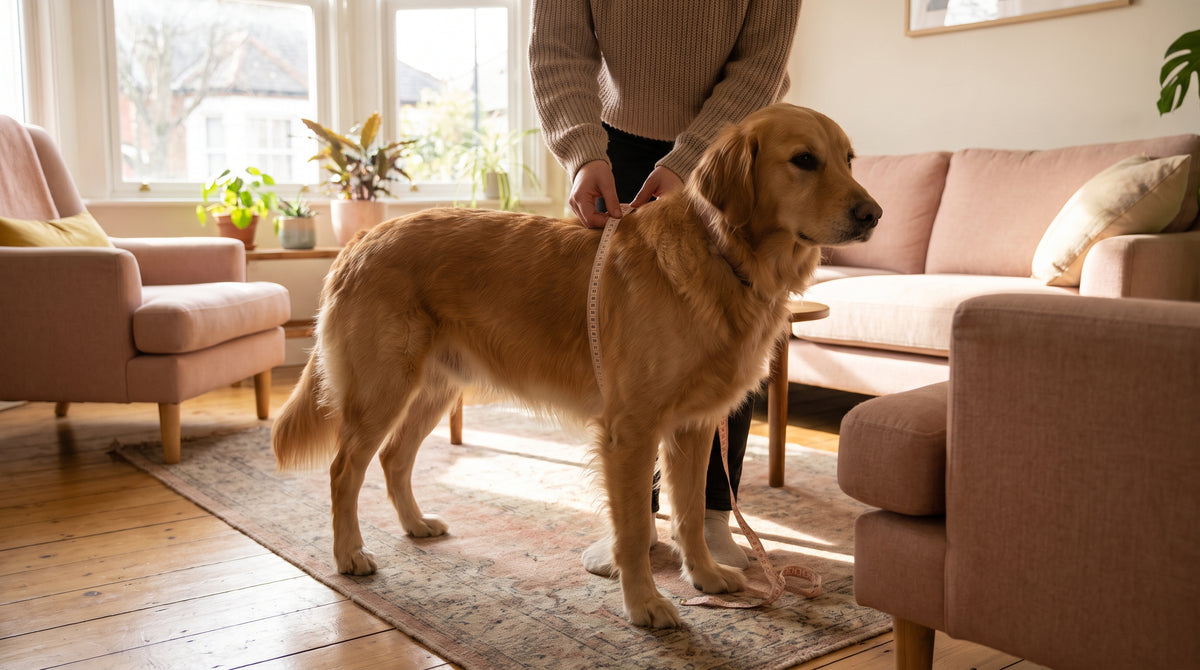
Not sure which size to choose? Check out our article on how to choose the right harness size for your dog to take the right measurements before ordering.


Leave a comment
This site is protected by hCaptcha and the hCaptcha Privacy Policy and Terms of Service apply.