
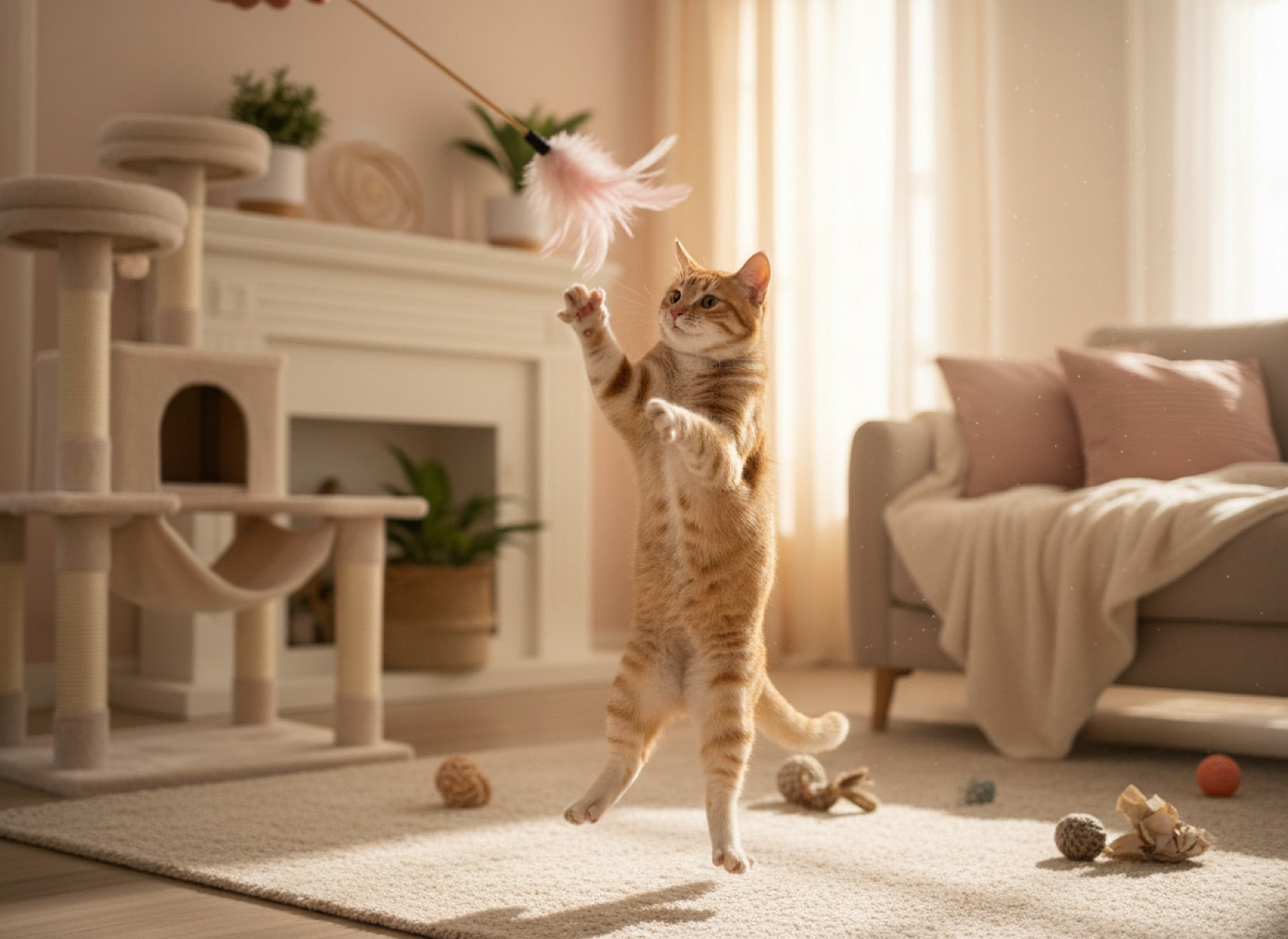


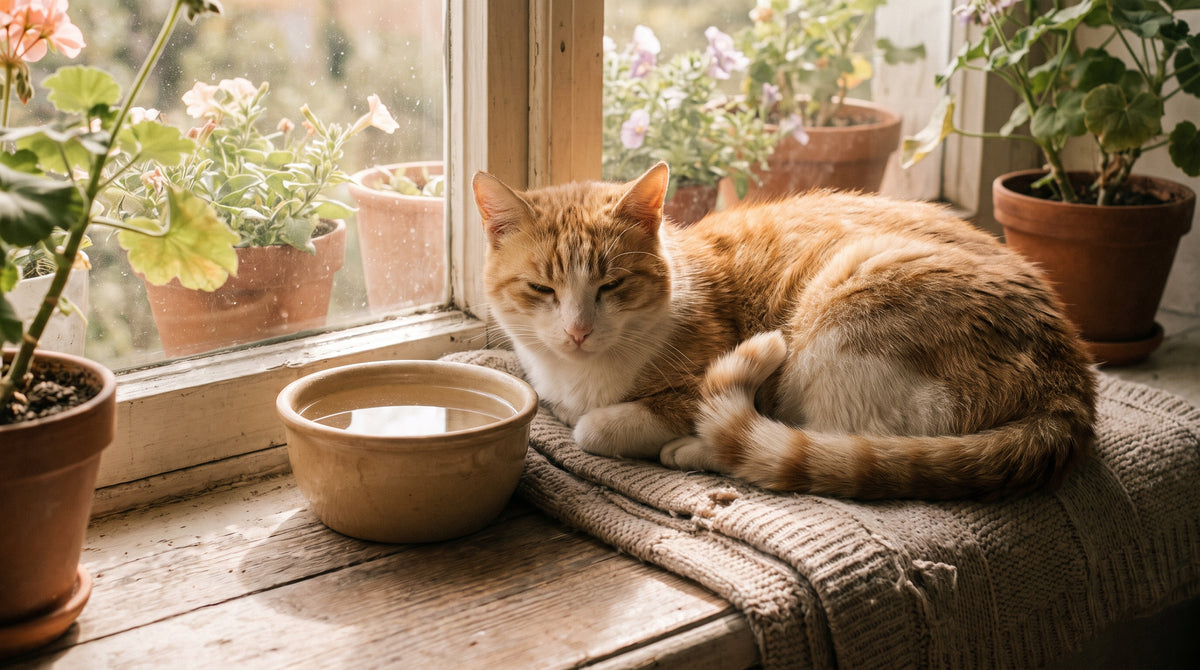
A senior cat, generally from around 10-11 years old, often benefits from kibble that is a little less calorie-dense, easy to chew and designed for more sensitive digestion. The right time to adapt their diet mainly depends on their weight, activity and everyday appetite, much more than on a single age figure.
1. From when do we talk about a senior cat?
Unlike dogs, the age at which seniority starts varies little by size in cats, since weight differences between breeds are less pronounced. Cats are generally considered senior from around 10-11 years old, then "super senior" after 15. These guidelines remain indicative: some 12-year-old cats stay close to adult activity levels, while others show signs of slowing down earlier, such as sleeping longer or grooming less thoroughly. In every case, gradual change over time matters far more than a precise date on the calendar.
| Cat's age | Indicative life stage |
|---|---|
| Under 7 years | adult cat |
| 7 to 10 years | mature cat, worth watching gradually |
| 10 to 14 years | senior cat |
| 15 years and above | super senior cat |
2. What changes in dietary needs
With age, many cats reduce their physical activity, which lowers their energy needs at the same weight. At the same time, some senior cats have more sensitive digestion or less effective teeth, which makes choosing kibble that is easier to chew and digest worthwhile. It is also common for appetite to vary more with age: some senior cats eat less, others seem hungrier than before, which should always be reported to a veterinarian rather than adjusted alone if the change is marked.
3. How to choose a suitable kibble
- Favour kibble that is easy to chew, with a texture that is not too hard if your cat has sensitive teeth.
- An adult or indoor cat formula, low in calories, can be enough for an active, fit senior cat.
- Check that the kibble stays appealing: a senior cat can become pickier than before about taste and texture.
- Plan a gradual transition over 7 to 10 days if you change kibble, as with any food change.
- Avoid switching products too often in a short time: a stable feeding routine often reassures a senior cat more than a wide variety of flavours.
Animorix does not currently offer an ACANA or ORIJEN range specifically labelled "senior" for cats; an adult cat kibble remains a good starting point, to be adjusted according to your cat's appetite and weight:
- ACANA Homestead Harvest, an adult cat formula with poultry.
- ORIJEN Guardian 8, a meat-rich recipe.
- The full adult cat kibble range to compare formulas.
4. Encouraging appetite without forcing it
If your senior cat eats less than before without this being a concern according to your veterinarian, a few simple habits can help them keep eating well: offering several small meals during the day rather than one or two large meals, placing the bowl in a quiet, easily accessible spot, or occasionally adding a small treat such as INABA Churu Senior 10+ to vary textures.
5. Water and hydration, a point to watch
Senior cats sometimes drink less than they should, especially if they eat only kibble. Adding more water points around the house, using a water fountain or offering a little wet food alongside kibble can help maintain good hydration, always alongside and never instead of your veterinarian's advice if you have any doubt.
6. The environment around mealtimes
A senior cat can find it harder to jump onto a table or a high piece of furniture to reach their usual bowl: placing food and water bowls somewhere easily accessible, ideally on the same floor as their main resting spot, saves them unnecessary movement. A slightly shallower bowl, which does not force the whiskers to touch the sides, is also appreciated by some older cats.
As with weight, regularly watching your cat's body shape helps you spot any gradual change: run your hand along their ribs once a month to have a stable reference over time, alongside veterinary check-ups.
7. Signs that should prompt a vet visit
Weight loss, unusual thirst or urination, difficulty moving or jumping, or any notable behaviour change should be reported to a veterinarian without delay: in senior cats, these signs are often more telling than a simple isolated change in appetite, and only a professional can determine whether they are part of normal ageing or need specific care.
8. In short
Choosing kibble for a senior cat mainly means watching their weight, appetite and mobility day to day, together with your veterinarian. An adult cat formula, easy to chew and well accepted, is often enough to support this life stage smoothly. Take the time to notice small habit changes rather than reacting to a single skipped meal, and keep an open dialogue with your veterinarian over the years.
Not sure which kibble to choose for your senior cat? Take our 2-minute quiz for a tailored selection: find the right kibble.


Leave a comment
This site is protected by hCaptcha and the hCaptcha Privacy Policy and Terms of Service apply.